Five technology pathways with immediate relevance
Heat pumps and waste-heat recovery
Many factories discharge usable heat through air, water or process circuits. A heat pump can raise the temperature of this resource and reuse it for hot water, space heating, washing, drying or other low- and medium-temperature processes.
Actual performance depends on source temperature, required delivery temperature, operating hours and hydraulic integration. Sizing should therefore not be based solely on building area or the capacity of the existing boiler.
Electric boilers and furnaces
Higher-temperature processes may use electric boilers, furnaces and other specialised equipment. The European Commission notes that commercially available electrification technologies can provide process heat up to the 400–500°C range, depending on the application and equipment selected.
No single technology fits every process. The right system may combine heat pumps for lower temperature levels with dedicated electric equipment for higher-temperature loads.
Electrical and thermal storage
A BESS can reduce power peaks, increase photovoltaic self-consumption and enable flexible equipment operation. Thermal storage can shift heating or process demand to periods with lower electricity prices or available solar generation.
These two forms of storage are complementary: the battery can serve fast electrical loads while a thermal store retains energy intended for heating processes.
Heat recovery and industrial symbiosis
Waste heat from one installation can become an input for another process, a neighbouring building or a local heat network. The assessment must consider the timing of supply and demand, available temperature, distance, losses and the investment needed for pipes and heat exchangers.
Efficient motors, automation and energy management
Motors, pumps, fans and compressors account for a significant share of industrial electricity use. Variable-speed drives, sensors and automated controls can reduce consumption without changing the core process.
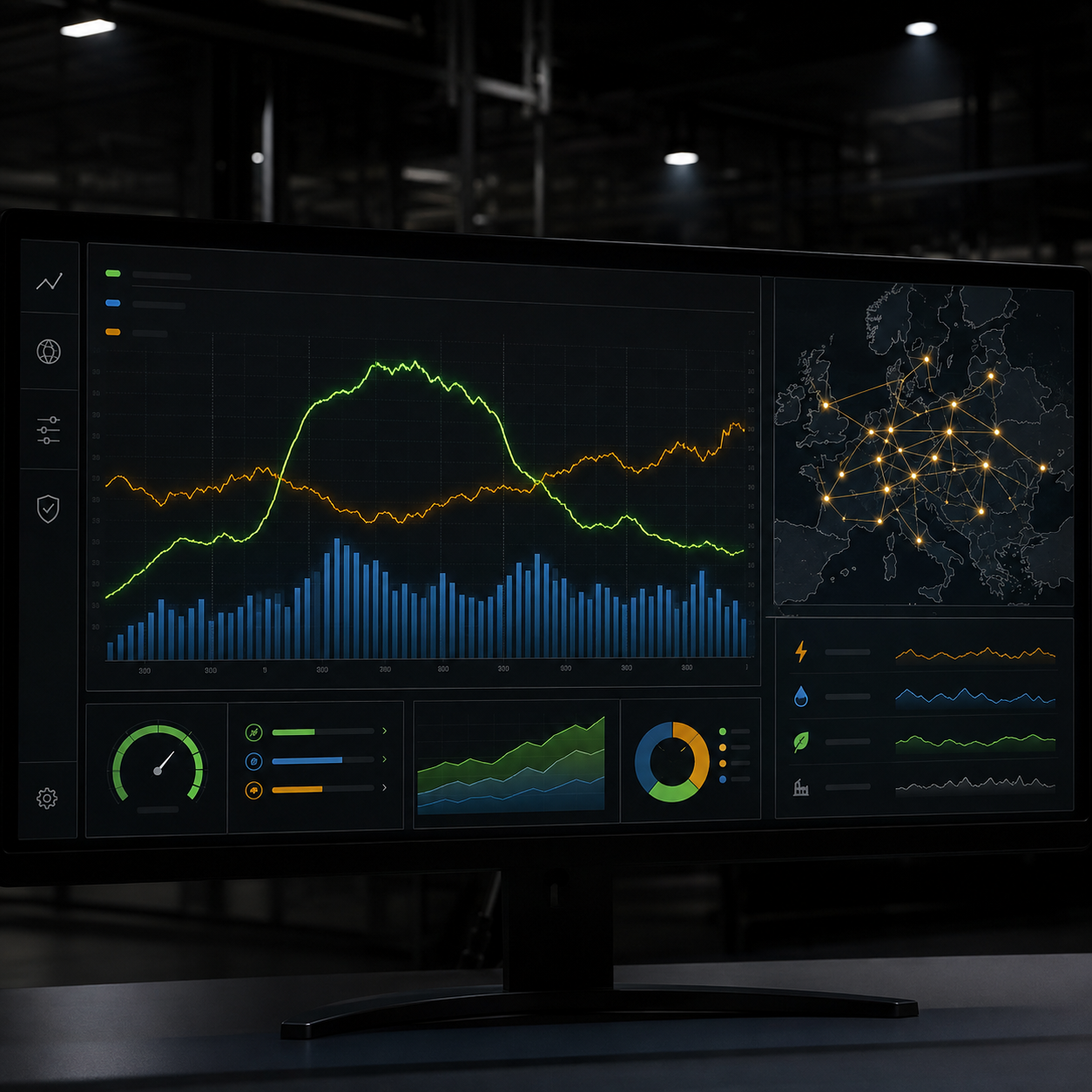
An energy-management system consolidates data, monitors consumption by area and asset, identifies deviations and coordinates photovoltaic generation, batteries, heat pumps and flexible loads.
Why solar panels alone are not enough
A photovoltaic system can reduce grid purchases, but its financial result depends on how much solar energy is consumed at the time of generation. Where factory demand does not match solar output, exported surplus may be worth less than electricity bought back later.
An industrial project should therefore be assessed as an integrated system covering:
- 15-minute electricity load curves;
- thermal demand and process temperatures;
- expected photovoltaic production;
- available grid connection capacity;
- loads that can be shifted;
- optimal battery and thermal-storage capacity;
- energy, maintenance and financing costs;
- operating scenarios and investment payback.
Where R290 technology fits
R290 is a natural refrigerant with a very low global-warming potential and is increasingly used in monobloc heat pumps for homes and light-commercial applications. Heat pumps can typically deliver three to five units of heat for each unit of electricity consumed, although performance depends on operating conditions.
R290 is flammable. Design, placement, transport, installation and servicing must therefore be carried out by trained personnel in accordance with applicable safety requirements. For high-power or high-temperature industrial processes, the refrigerant and equipment must be selected after an application-specific assessment; a building-heating unit should not automatically be presented as a solution for every industrial process.
A practical starting point for companies
ECONERGY can support energy audits, load-curve analysis, photovoltaic and BESS sizing, heat-pump integration, technical-financial modelling and coordination of the technical, legal and operational stages together with authorised specialists.
- Conduct an energy audit and equipment inventory.
- Measure load curves and process temperatures.
- Identify losses and recoverable heat sources.
- Determine which loads can be electrified or shifted.
- Size photovoltaic generation, BESS, thermal storage and heat pumps as one system.
- Model technical and financial outcomes under several energy-price scenarios.
- Complete engineering, permitting, installation and performance monitoring.